Ordering
问题
文件系统创建一个文件可能要做很多块更新:allocate data block、write data block、allocate inode、write inode block、update bitmap、update directory、update directory modify time。crash 可以发生在任意一步,因此恢复机制必须能够识别、清理或完成磁盘上残留的中间状态。
一个经典判断题是:如果要保存一块 data 和一个指向它的 directory entry / pointer,且每次写都是 atomic,应该先写 data 还是 pointer?
答案是先写 data,再写 pointer。先写 pointer 后 crash,namespace 已经暴露了一个可能还没写好的 block,用户会看到垃圾内容。先写 data 后 crash,最多留下 unreachable data block,recovery 可以通过扫描清理。
机制
careful ordering 把多块更新排成安全顺序,让每个中间状态都更容易恢复。FFS + fsck 的恢复大致是一次全局整理:先 scan inode table,寻找 unlinked files;对无法从 directory 到达的 inode,删除或放入 lost+found;再比较 free block bitmap 和 inode trees,并扫描 directories,修复缺失或不一致的 metadata。
它的代价也明显:fsck 时间常与 disk size 成正比,大磁盘会让全盘扫描非常慢。
COW / ZFS
问题
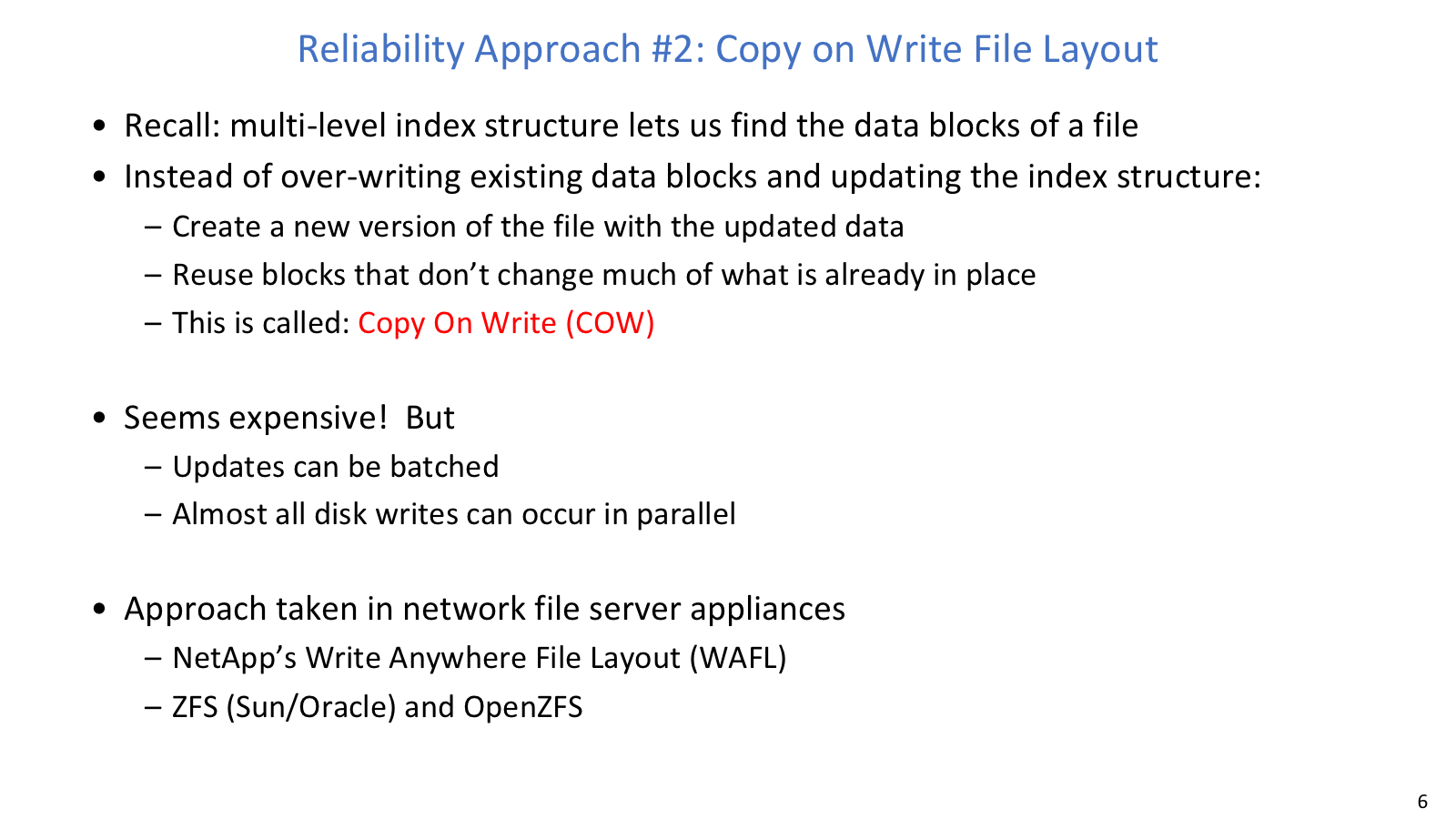
careful ordering 仍然会原地修改旧结构,所以 recovery 需要理解很多中间状态。Copy-on-write 不覆盖 existing data blocks 或 index structure,旧版本在新版本完成前一直保持完整。
机制
如果文件用 tree of blocks 表示,更新某个 leaf 时,只需要重写从 changed leaf 到 root 的路径,也就是 leading fringe。未改变的 subtree 继续共享旧 blocks。最后一步切换 root pointer 或 version pointer,新版本才变成可见版本。
ZFS/OpenZFS 是代表系统。它使用 variable sized blocks,范围从 512B 到 128KB;pointer 中保存 version number;free space 用 extents tree 表示;多个 writes 可以先 buffer,再一起创建新版本。COW 的成本是写放大和 metadata 更新变多,但顺序写、batching 和共享未变 blocks 可以缓解这部分开销。
Transactions
问题
transaction 是 atomic sequence of reads and writes,把系统从一个 consistent state 带到另一个 consistent state。它和 critical section 的关系很近:critical section 让内存中共享数据结构的更新看起来 atomic;transaction 把这种 atomic update 扩展到 stable storage。
典型结构是:
| |
begin 分配 transaction id;rollback 撤销失败路径;commit 声明这一组更新应该持久生效。
Log 的基本思想
log 利用一个更小的 atomic action:append/write 一个 log item。只要 log 中出现 durable commit record,recovery 就知道这组更新必须生效;如果只有 start 和 update records,没有 commit record,就不能把它视为成功。这样一来,判断 transaction 是否完成就不必重新理解所有文件系统结构,只需要看 log 中有没有越过 commit 这条线。
log 中常见记录包括:
- start transaction record
- update records
- commit transaction record
commit record 是 recovery 的分界线。
Journaling
机制
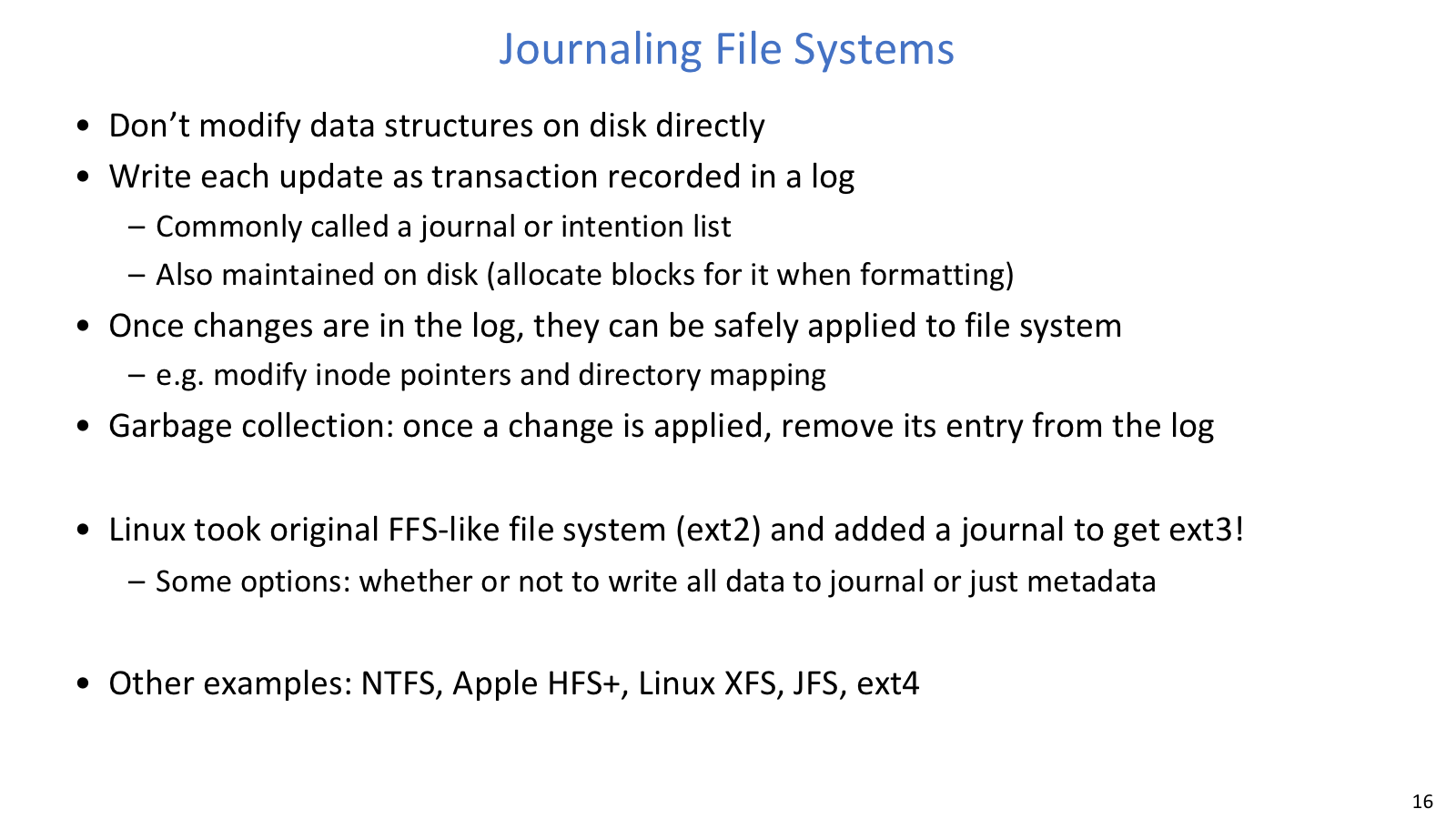
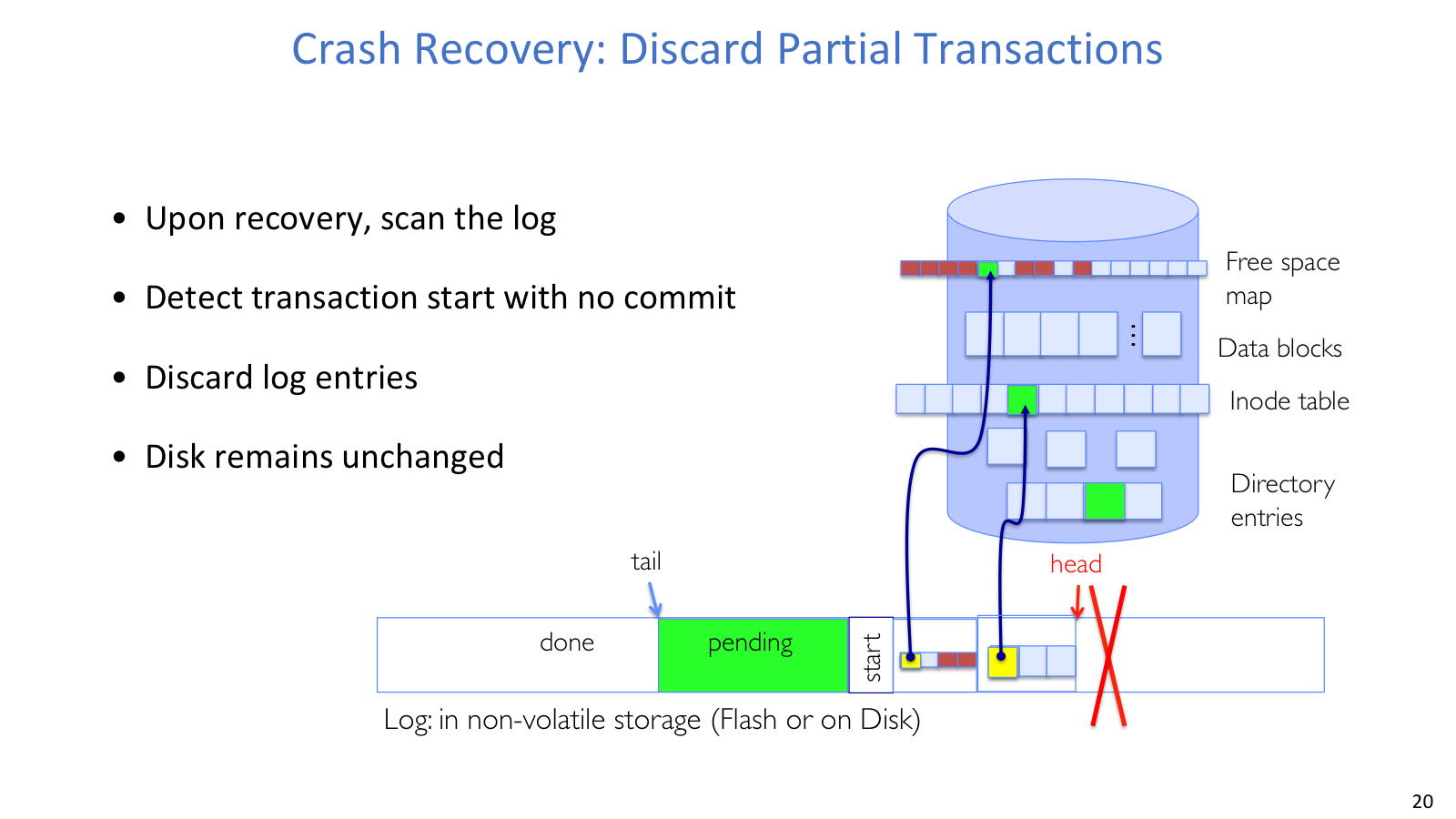
journaling file system 不直接把每个 metadata 修改写到最终位置,而是先把 update 作为 transaction 记入 journal,也叫 intention list。journal 本身在 non-volatile storage 上。只有 journal 中的 transaction 安全后,文件系统才把修改 apply 到真实结构,例如 inode pointers、directory mapping、free map。
创建文件时,非日志化路径可能是:
| |
任意一步 crash 都可能留下 map、inode、directory 不一致。日志化路径则先写 log:
| |
recovery 时扫描 log:
| |
取舍
journaling 的好处是多个 physical operations 被当作一个 logical unit,crash 后要么全部出现,要么全部不出现。成本是写放大:如果 data 也 journal,可能要写两次,一次写 log,一次写目标位置。因此现代文件系统常只 journal metadata,file contents 直接写到目标位置。
log-structured filesystem 和 journaled filesystem 不同。前者的数据最终就留在 log-style layout 中;后者仍有普通文件系统布局,journal 主要服务 recovery。
Distributed systems
为什么分布式
分布式系统把多台 physically separate computers 组合起来完成任务。便宜机器可以横向扩展,节点故障后可由其他机器接手,多处存储也能提高 durability。
更多机器和网络依赖也可能降低 availability;任一节点 crash 都可能影响 shared state,攻击面也随之扩大。单机内由 lock 或 test-and-set 解决的问题,跨机器后会变成 message protocol 和 durable decision 问题。
transparency 是把复杂性藏在简单接口后面。常见目标包括 location transparency、migration transparency、replication transparency、concurrency transparency、parallelism transparency 和 fault tolerance transparency。
Protocol
protocol 是通信约定,至少包括两层含义:syntax 规定消息格式、发送和接收顺序;semantics 规定消息含义,以及收到消息或 timer expires 时该做什么。
协议常被画成 state machine 或 message transaction diagram。分布式节点没有 shared memory,常用 abstraction 是 Send(message, mbox) 和 Receive(buffer, mbox)。receiver 不会收到半条 message,但 message 可能延迟、丢失,节点也可能 crash。
Consensus
consensus problem 要求所有 nodes propose a value,一些 nodes 可能 crash and stop responding,最终所有 remaining nodes decide 同一个 proposed value。在存储系统里,这个 value 常是 commit 或 abort。
Two Generals’ Paradox 说明:在不可靠网络上,两个将军无法通过可能丢失的 messenger 保证“同时行动且双方都确定对方也确定”。即使消息最终都到了,也无法确认最后一个 ack 是否到达。因此分布式协议不能依赖 perfect simultaneity,而要记录可恢复的 durable decision。
2PC
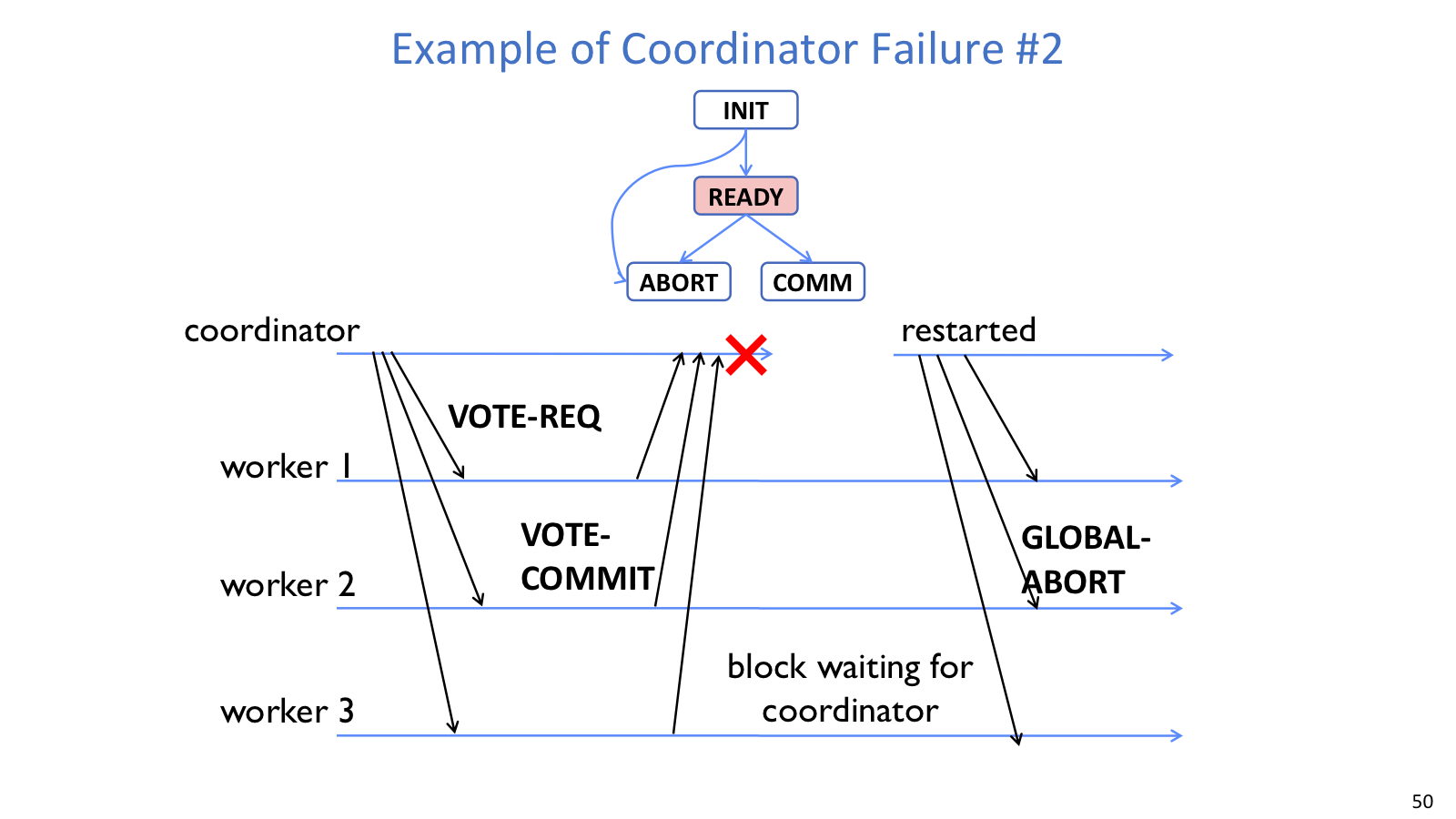
问题
2PC 不解决 Two Generals 的 simultaneous action。它解决 distributed transaction 中多个机器最终一致 commit 或 abort 的问题。角色是 one coordinator 和 N workers / participants。commit 条件是 unanimous approval:只有所有 workers 都 vote commit,global decision 才能是 commit。
每台机器都需要 stable log。crash recovery 时,节点先读 log,恢复 crash 前已经做出的 promise:自己是否 vote commit、是否已看到 global decision。没有这份 durable state,节点重启后就无法知道自己还能不能单方面 abort。
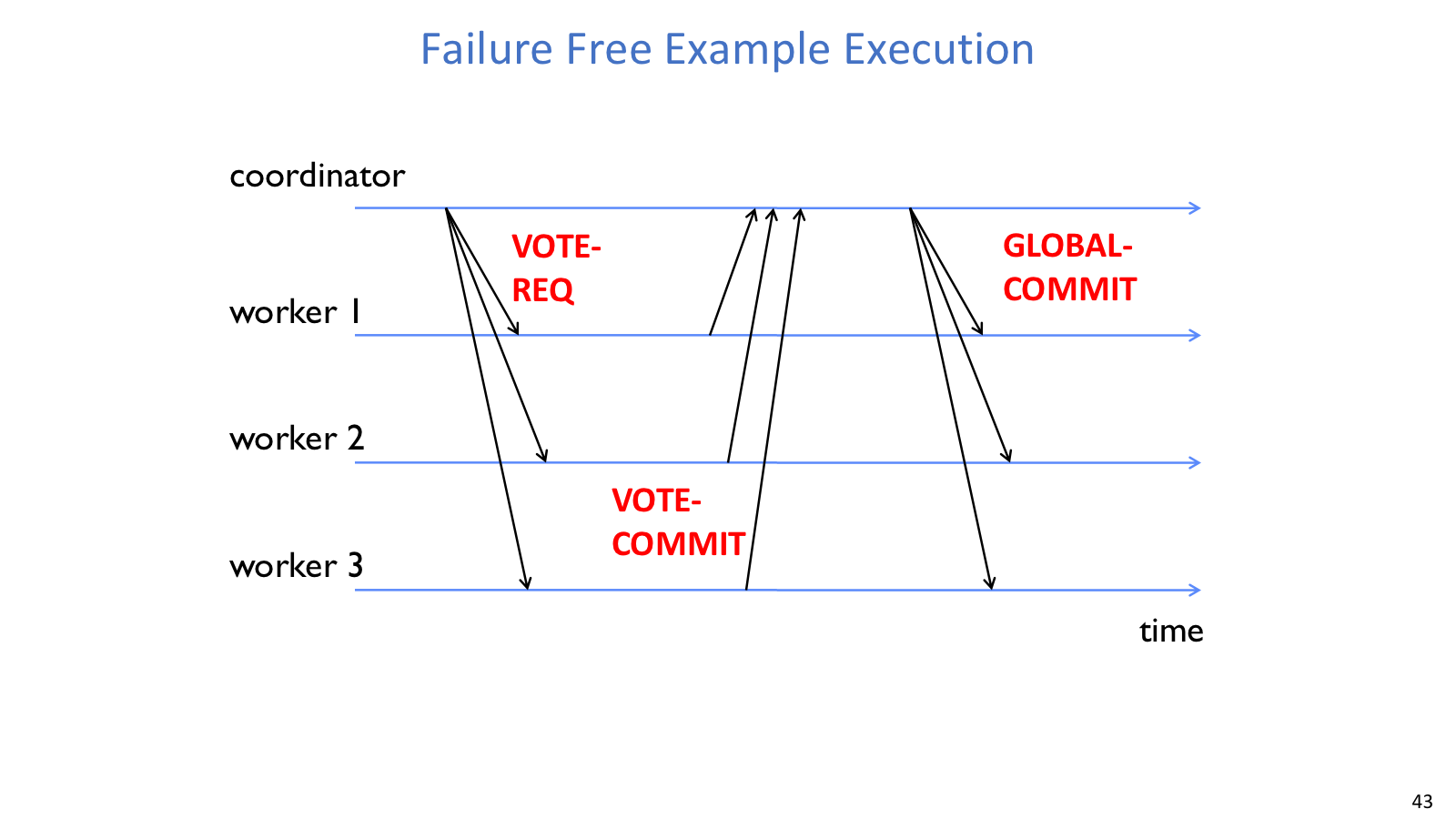
Prepare phase
- coordinator 发送
VOTE-REQ给所有 workers。 - worker 判断自己是否 ready。
- 若 ready,worker 写 stable log,记录 prepared / vote commit,然后发送
VOTE-COMMIT。 - 若 not ready,worker 写 abort log,发送
VOTE-ABORT,并立即 abort。 - coordinator 如果收到任一 abort 或 timeout,就选择 global abort。
Commit phase
如果 coordinator 收到所有 N 个 VOTE-COMMIT:
- coordinator 写
COMMIT到本地 stable log。 - coordinator 广播
GLOBAL-COMMIT。 - workers 收到后 commit,写 log,回复 ACK。
- coordinator 收齐 ACK 后记录完成。
如果有 abort:
- coordinator 写
ABORT。 - coordinator 广播
GLOBAL-ABORT。 - workers abort 并记录。
高层伪代码可以写成:
| |
State machines and failures
coordinator 的主要状态是 INIT、WAIT、ABORT、COMMIT。在 WAIT 中收到任何 VOTE-ABORT 或 timeout,就 global abort;收到所有 VOTE-COMMIT,才 global commit。
worker 的主要状态是 INIT、READY、ABORT、COMMIT。在 INIT 中还没有承诺,可以 timeout abort;在 READY 中已经写 log 并 vote commit,不能自行 abort,因为 coordinator 可能已经决定 commit,只是消息还没送达。
恢复规则如下:
| 节点 | log/state | 恢复动作 |
|---|---|---|
| Coordinator | INIT / WAIT / ABORT | abort |
| Coordinator | COMMIT | commit |
| Worker | INIT / ABORT | abort |
| Worker | COMMIT | commit |
| Worker | READY | ask coordinator |
2PC 的核心缺点就是 blocking。典型场景是:worker B 写了 prepared to commit 并发送 yes vote,随后 B crash;coordinator A 也 crash。B 恢复后看到自己已经 vote yes,不能自行 abort,因为 A 可能已经写了 commit。B 必须等待 A 恢复或询问到 global decision,期间可能持有 locks 或 pinned pages。